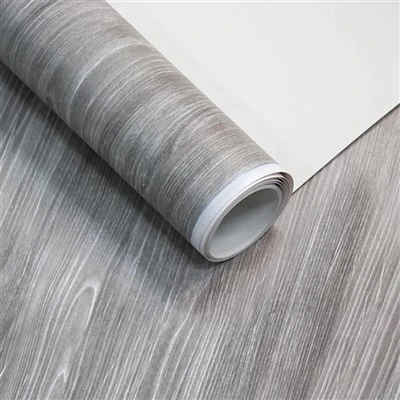
1. Material Composition
PVC Film (Polyvinyl Chloride Film): The core material of PVC film is polyvinyl chloride, a kind of thermoplastic polymer that features good durability and flexibility. To enhance its heat resistance, toughness and ductility, appropriate additives are added during the production process. The surface of this film is usually coated with a layer of paint, the middle layer is PVC base material, and the bottom layer is a back-coating adhesive.
Ordinary Adhesive Film: There is no fixed standard for the material of ordinary adhesive film, which is flexibly selected according to actual application needs. Common materials include paper, plastic, fabric or metal foil, with a wide range of components.
2. Adhesive Layer Design
PVC Film: Most PVC films do not come with a built-in adhesive layer. When in use, they need to be matched with special adhesive materials, such as contact cement or laminating-specific adhesives, to achieve adhesion to surfaces, and the lamination process has specific requirements.
Ordinary Adhesive Film: One side of the ordinary adhesive film is pre-coated with an adhesive layer, which allows direct pasting without additional adhesive materials. The types of adhesive layers are diverse, including pressure-sensitive adhesives, hot-melt adhesives and solvent-based adhesives, which can meet different pasting needs.
3. Application Scenarios
PVC Film: Focusing on decorative purposes, PVC film is often used for surface lamination decoration of furniture, cabinets, door panels, wall panels and other items. It can also be applied to packaging, sign production and protective coatings for various surfaces.
Ordinary Adhesive Film: Its application scope is more inclined to functionality, covering fields such as label printing, product packaging, graphic design and industrial labeling. It is mainly used for surface bonding, marking, covering protection and sealing operations.
4. Appearance and Finish
PVC Film: It has strong decorativeness, with a variety of textures, patterns and color options, which can effectively improve the aesthetics of the application scenario. It is very suitable for indoor decoration, furniture beautification and other scenarios that have requirements for appearance.
Ordinary Adhesive Film: Most of its appearance is plain or simply printed, and its core function is concentrated on functionality, such as marking and protection. The decorative effect is relatively basic, so there is no need to pay too much attention to appearance texture.
5. Adhesion Firmness and Environmental Friendliness
PVC Film: It needs to be pressed and pasted at a high temperature of 110 degrees Celsius by a special vacuum laminating machine, which combines closely with the board and is not easy to fall off after long-term use. Regarding environmental friendliness, some people have misunderstandings, believing that PVC, as a chemical product, will have toxic odors. In fact, the raw materials for producing PVC film are specially extracted, and toxic substances have been completely removed. The finished product is non-toxic and odorless, and will not irritate human skin and respiratory system. It is especially suitable for people who are allergic to wood and paint to decorate furniture and kitchenware surfaces. At the same time, the use of PVC film can reduce the use of natural wood, and more medium-density boards, particle boards and other materials can be used, which is more environmentally friendly.
Ordinary Adhesive Film: It adopts the room-temperature cold pasting method and is directly pasted on the surface of the board. After one or two years of use, the film is prone to detachment due to the instability of the adhesive layer under long-term use and environmental changes.