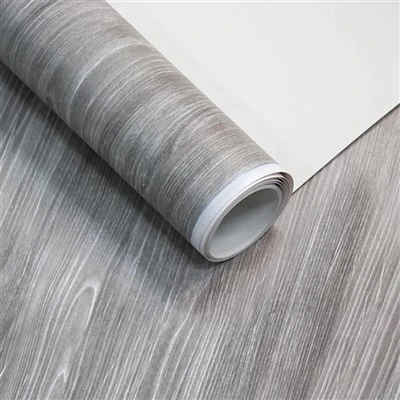
The production stage of eco-friendly PVC decorative film embodies the core concept of environmental protection through resource optimization and pollution control. In terms of raw materials, manufacturers widely adopt recycled PVC resin instead of virgin petroleum-based resin, which not only reduces reliance on non-renewable petroleum resources but also lowers carbon emissions generated during crude oil extraction and refining. Unlike traditional PVC films that use harmful phthalate plasticizers, eco-friendly versions utilize environmentally benign alternatives such as citrate esters and epoxidized soybean oil, eliminating the risk of soil and water contamination caused by plasticizer leakage during production. Additionally, the colorants employed are heavy metal-free and low-VOC (Volatile Organic Compounds) formulations, ensuring no pungent exhaust gases are emitted during the production process, thus complying with stringent international environmental standards such as REACH and RoHS. In terms of production technology, formal manufacturers adopt closed-loop production systems: waste gases such as small amounts of hydrogen chloride are treated with acid-base neutralization before emission, and cooling water and cleaning water are filtered for recycling. This reduces wastewater discharge by more than 60% compared to traditional processes. Meanwhile, production scraps can be directly recycled and reused, increasing the utilization rate of leftover materials to 95%, resulting in almost no solid waste.
During the usage phase, eco-friendly PVC decorative film demonstrates low environmental harm and contributes to long-term resource conservation. A key advantage is its minimal environmental load on both indoor and outdoor environments. Unlike inferior traditional PVC films that release harmful substances such as formaldehyde, benzene series, and heavy metals into the air during use, eco-friendly PVC decorative film emits no toxic or hazardous substances. This not only safeguards human health by maintaining good indoor air quality but also prevents volatile pollutants from diffusing outdoors and causing atmospheric pollution. Moreover, eco-friendly PVC decorative film exhibits excellent durability, including wear resistance, water resistance, and stain resistance. When applied to the surfaces of substrates such as wood and metal, it forms a protective layer that extends the service life of furniture and building materials. For instance, wardrobe door panels coated with eco-friendly PVC film can have a service life of 10 to 15 years, significantly longer than uncoated panels. This reduces the frequency of product replacement due to damage, thereby indirectly reducing resource consumption and the environmental impact associated with the production of new products. Even in outdoor applications, specially designed weather-resistant eco-friendly PVC films are less prone to aging, cracking, and fragmentation, minimizing the risk of microplastic pollution in natural environments.
The disposal and recycling stage is a crucial link in measuring the environmental friendliness of eco-friendly PVC decorative film. As a thermoplastic material, PVC is theoretically recyclable, but traditional PVC decorative films often face high recycling costs due to their composite structure with wood, glue, and other materials, leading to improper disposal such as incineration or landfilling. Incineration produces highly toxic substances like dioxins, while landfilling occupies land for a long time and may cause plasticizers to seep into soil and groundwater. In contrast, eco-friendly PVC decorative film addresses these issues through innovative design and systematic improvements. Many products adopt separable designs and marked recycling labels, facilitating the separation of PVC film from composite substrates during recycling and reducing separation costs. Some manufacturers have even established specialized recycling systems, reprocessing waste film into industrial PVC products such as pipes and profiles, forming a resource circulation loop. Furthermore, the industry is actively researching and developing new materials such as bio-based PVC films and degradable PVC blends, which are expected to further reduce environmental burdens after disposal by enabling biodegradation under specific conditions.
Despite its significant environmental advantages, eco-friendly PVC decorative film still faces certain challenges. For example, the promotion of its recycling system is uneven globally, with inadequate recycling facilities and low public awareness of classification in some regions, limiting the efficiency of resource recycling. Additionally, the production cost of eco-friendly raw materials and advanced processes is relatively high, which may hinder the widespread adoption of eco-friendly products in some low-cost markets. However, with the continuous advancement of technology and the gradual improvement of global environmental policies, these challenges are expected to be resolved.
In conclusion, the environmental impact of eco-friendly PVC decorative film is predominantly positive, characterized by low emissions, low resource consumption, and recyclability throughout its life cycle. It effectively overcomes the environmental drawbacks of traditional PVC decorative films and provides a sustainable solution for the decorative materials industry. To maximize its environmental benefits, it is necessary for governments, enterprises, and the public to work together: governments should strengthen policy guidance and improve recycling infrastructure; enterprises should continue to optimize production technology and reduce costs; and the public should enhance environmental awareness and actively participate in classification and recycling. Only in this way can eco-friendly PVC decorative film truly play its role in promoting green development and contribute to the construction of a sustainable ecological environment.