1. Raw Material Preparation and Mixing
The core raw material of PVC decorative film is polyvinyl chloride (PVC) resin, which is usually combined with various additives to optimize the film's performance. The main additives include plasticizers (to improve flexibility), stabilizers (to prevent degradation during processing), fillers (to reduce costs and enhance hardness), colorants (to achieve different color effects), and UV absorbers (for outdoor-resistant products).
First, the PVC resin and various additives are accurately weighed according to a specific formula. Then, they are put into a high-speed mixer for thorough mixing. The high-speed rotation generates friction and heat, making the additives fully blend with the PVC resin and form a uniform dry blend. This process is crucial because the uniformity of the mixture directly affects the subsequent processing stability and the final product's performance.
2. Calendering or Extrusion: Film Formation
After mixing, the dry blend is processed into a film through either calendering or extrusion, which are the two most common film-forming processes.
For the calendering process, the dry blend is first melted in an internal mixer or extruder. The molten PVC material is then fed into a set of rotating calender rolls with adjustable gaps and temperatures. As the material passes through the rolls, it is pressed into a continuous film of a specific thickness. The temperature and speed of the calender rolls are precisely controlled to ensure the film's smoothness and uniformity. This process is suitable for producing thick PVC decorative films with high surface quality.
For the extrusion process, the dry blend is fed into a single-screw or twin-screw extruder. The material is heated and melted in the extruder barrel and then extruded through a T-die. The extruded molten film is cooled and solidified by a chill roll to form a primary film. Extrusion is more suitable for producing thin films and can achieve higher production efficiency. Some advanced production lines also use co-extrusion technology to produce multi-layer PVC decorative films with different functional layers (e.g., a scratch-resistant surface layer and a flexible base layer).
3. Surface Decoration and Processing
To meet the aesthetic requirements of decorative applications, the primary film needs to undergo surface decoration processing. Common decoration techniques include printing, embossing, and laminating.
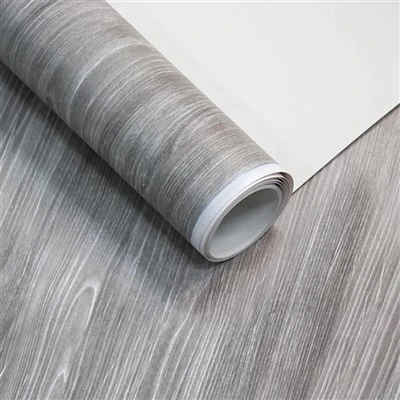
Printing is used to add patterns, textures, or colors to the film surface. Gravure printing and flexographic printing are the main methods. Gravure printing is suitable for high-precision, complex patterns with bright colors, while flexographic printing is more efficient and cost-effective for simple patterns. For products that require a three-dimensional texture (e.g., wood grain, stone texture), embossing is performed. The film is passed through a pair of embossing rolls with a specific texture pattern, and under the action of heat and pressure, the pattern is pressed onto the film surface, creating a realistic three-dimensional effect. Some high-end products may also undergo laminating processing, where a layer of protective film (e.g., PET film) is laminated on the surface to enhance scratch resistance and wear resistance.
4. Post-Processing: Cooling, Trimming, and Heat Setting
After surface decoration, the film needs to go through cooling, trimming, and heat setting processes. The film is first cooled by a cooling roll to ensure complete solidification and shape stabilization. Then, the edges of the film are trimmed by a trimming machine to remove irregular parts and ensure the film's width meets the standard requirements.
Heat setting is a key step to improve the dimensional stability of the film. The film is placed in a heat setting oven at a specific temperature for a certain period of time, which can eliminate internal stress generated during processing and prevent the film from shrinking or deforming during subsequent use. The temperature and time of heat setting are adjusted according to the film's thickness and formula.
5. Quality Inspection and Winding
Before being packaged, the PVC decorative film must undergo strict quality inspection. The inspection items include thickness uniformity, surface smoothness, pattern clarity, color consistency, tensile strength, flexibility, and environmental indicators (e.g., VOC content). Advanced production lines are equipped with online inspection equipment to detect defects such as bubbles, scratches, and uneven thickness in real time. Unqualified products are removed or repaired in time.
After passing the inspection, the qualified film is wound into rolls by a winding machine. The winding tension is controlled to ensure the rolls are compact and not loose. Finally, the rolls are labeled with product information (e.g., specifications, batch number, production date) and packaged to prevent damage during transportation and storage.
Conclusion
The production of PVC decorative film is a complex process that integrates material science, mechanical engineering, and decorative technology. Each step, from raw material selection and mixing to film formation, decoration, post-processing, and quality inspection, requires strict process control. With the continuous advancement of technology, new production processes and environmentally friendly additives are constantly being applied, making PVC decorative film more high-performance, environmentally friendly, and diversified to meet the growing market demand.