I. Core Base Material Quality (Decisive Factor)
The base material is the core factor affecting price, primarily depending on the purity of the PVC resin, the proportion of ingredients, and the type of raw materials:
PVC Resin Grade: Using high-purity virgin PVC resin (such as imported raw materials from Bayer (Germany) or Dow Chemical (USA)) costs more than 30% more than domestic ordinary resin. Using recycled PVC significantly reduces costs, but also lowers the price, and results in poorer environmental friendliness and durability.
Ingredient Proportion: The ratio of PVC to fillers such as calcium carbonate directly affects cost. A higher PVC content results in better product flexibility and wear resistance, and a higher price. An excessively high calcium carbonate content reduces product quality, leading to a lower price.
Auxiliary Raw Materials: Adding environmentally friendly stabilizers, high-end plasticizers, and other auxiliary raw materials, or special modifiers to achieve flame retardant and antibacterial functions, will increase production costs and drive up prices.
II. Product Specifications (Directly Affecting Cost Accounting) Differences in the specifications of roll products directly affect unit costs and are an important reference for procurement quotations:
Thickness: The standard thickness range is 0.1mm-0.8mm. The thicker the roll, the more material is used per unit area, and the higher the price (e.g., a 0.8mm thick product is more than twice as expensive as a 0.2mm thick product).
Roll Size: Width and length can be customized. Standard widths are suitable for flooring substrate specifications, and standard lengths are 100m-300m. Customizing special widths (non-standard sizes) and extra-long lengths will increase production losses and raise prices by 5%-20%. For the same thickness, longer lengths result in a slightly lower price per meter/square meter (due to batch spread reducing losses).
Surface Texture: Different surface treatments such as matte, glossy, and soft-gloss have different processing costs. Products with a soft-gloss finish or a special frosted texture are slightly more expensive than regular matte or glossy products.
III. Production Process Complexity (Affecting Processing Costs)
The precision and complexity of the process directly determine the processing cost. The differences are mainly reflected in the decorative effect and product performance:
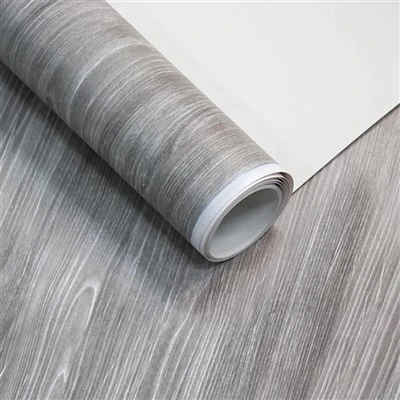
Printing and Embossing Processes: Ordinary printing processes are less expensive; high-definition digital printing and synchronous embossing processes (precisely replicating wood grain, marble textures, etc.) require specialized equipment and high-end inks, resulting in higher costs and a 10%-30% price increase; high-precision processes such as electro-engraving printing, due to their clear printing and rich colors, also increase processing costs.
Surface Treatment: Products with only basic lamination are less expensive; adding special treatments such as UV coating (enhancing gloss and ease of cleaning), anti-fouling coating, or flame-retardant coating will increase processing steps and raw material costs, thus increasing the price.
Production Equipment: Utilizing imported high-precision extrusion, calendering, and printing equipment results in superior product flatness and texture clarity. However, this also increases equipment wear and energy consumption, leading to a 15%-25% higher price compared to products manufactured with domestically produced equipment.
IV. Order Quantity and Procurement Model (Affecting Negotiation Space)
Procurement scale directly impacts supplier pricing. Bulk procurement significantly reduces unit costs:
Order Quantity: Small-batch purchases (e.g., less than 10 rolls) mean suppliers cannot amortize production, cutting, and packaging losses, resulting in higher prices. Large-batch purchases (e.g., 50 rolls or more) allow for wholesale pricing, typically with a 10%-20% discount. Larger order quantities offer greater negotiation space, with some manufacturers offering additional discounts of 5%-10% for very large orders (e.g., 100 rolls or more).
Procurement Model: Long-term stable cooperative procurement (e.g., annual supply agreements) offers more favorable cooperative prices from suppliers. Temporary bulk purchases and expedited purchases, requiring priority production and delivery, result in a 5%-15% price increase. Higher expedited orders incur greater premiums.
V. Additional Requirements (Additional Costs) Customization based on the buyer's specific needs will incur additional costs, leading to a price increase:
Customization Requirements: Customizing exclusive colors, special textures, or exclusive specifications (non-standard width, length, and thickness) requires new pattern making and equipment debugging. Pattern making and debugging costs will be factored into the product price. The higher the customization difficulty, the greater the price increase (standard customization increases by 10%-30%, complex customization increases by over 30%).
Environmental Protection and Certification: Compliance with higher environmental standards (such as EU CE, China RoHS certification) or provision of environmental testing reports is required. Higher quality environmentally friendly raw materials and additional testing procedures are needed during production, increasing the price by 8%-15%. Standard products without special certification requirements are relatively cheaper.
Packaging and Delivery: Standard simple packaging (waterproof membrane + woven bag) is free; customized packaging (logo printing, individual moisture-proof packaging) requires an additional packaging fee; regarding delivery, there is a price difference between supplier-paid shipping and buyer-pickup; delivery to remote areas will incur an additional 5%-10% logistics cost due to high logistics costs, and expedited delivery will be even more expensive.
VI. Other Influencing Factors
Brand and Origin: Well-known brand manufacturers (with large-scale production and strict quality control) offer 15%-30% higher prices than smaller manufacturers due to guaranteed quality and comprehensive after-sales service; imported products are more than 40% higher than similar domestic products due to tariffs, shipping costs, and brand premiums, with some high-end imported models commanding a premium of up to double.
Market fluctuations: The prices of core raw materials such as PVC resin and ink fluctuate due to factors such as oil prices. Rising raw material prices will directly lead to higher product prices (e.g., if the price of PVC resin increases by 10%, the product price will usually increase by 5%-8%). Market supply and demand also affect prices. Prices may rise slightly during peak demand seasons (such as the peak season for home renovation), while there may be promotional activities during the off-season.
发送反馈
侧边栏
历史记录
已保存