I. Step One: Clarify Core Needs and Usage Scenarios (Crucial)
All choices are based on scenario positioning. First, clarify two key questions to quickly determine the product direction:
Core Requirements: Is the focus on aesthetics (e.g., furniture renovation, wall decoration), functional protection (e.g., waterproofing, abrasion resistance), or a combination of both?
Usage Scenarios: Indoor/Outdoor, Environmental Contact (e.g., exposure to sunlight, chemicals, humid environments), Substrate Type (wood/metal/concrete, etc.), Expected Service Life.
Examples: Indoor cabinet renovation (Core: decoration + light abrasion resistance; Scenario: indoor; Substrate: wood; Service life: 5-8 years); Roof waterproofing (Core: waterproofing + anti-aging; Scenario: outdoor; Substrate: concrete; Service life: 20+ years).
II. Step Two: Matching Product Types (Select by Scenario)
PVC films are mainly divided into two types, directly corresponding to different needs, eliminating the need for cross-selection. Specific suitable applications are as follows:
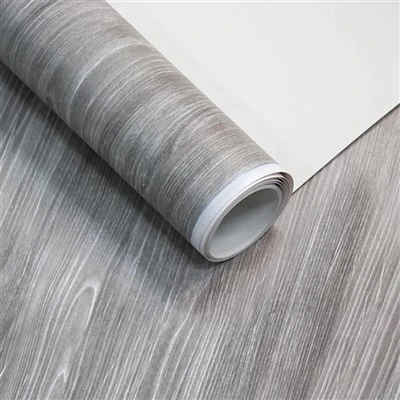
1. Decorative PVC Film (Thickness 0.06–0.22mm)
Suitable Needs: Primarily decorative, with light protection as a secondary function; not requiring high-intensity waterproofing or abrasion resistance.
Key Scenarios:
Interior Decoration: Wall, ceiling, furniture (cabinets, wardrobes, dining tables) renovation/covering; DIY crafts; signage production.
Light Covering: Vehicle interior film application; surface decoration of small equipment (non-outdoor exposure, non-frequent contact scenarios).
Key Selection Criteria: Prioritize texture, color, and substrate compatibility (e.g., wood grain texture for wood substrates, matte solid color for metal substrates).
2. Architectural Waterproof PVC Membrane (Thickness 0.6–2.0mm, including fiberglass/polyester reinforcement layer)
Suitable Needs: Primarily for waterproofing, aging resistance, and high-strength protection; suitable for building construction or damp, outdoor applications.
Key Applications:
Building Waterproofing: Flat roofs, basement walls/foundations, subway tunnels, roof gardens, water conservancy projects.
Outdoor Protection: Waterproofing of outdoor equipment surfaces, waterproofing underlayment for open-air sites (requiring long-term resistance to sun exposure and rain).
Key Selection Criteria: Prioritize thickness, reinforcement layer material, and waterproofing performance, rather than aesthetics.
III. Step 3: Focus on Key Parameters (Select Based on Needs, Avoid Common Mistakes)
After determining the product type, further refine it using the following core parameters to ensure it meets specific needs and avoids over- or under-selection:
1. Thickness (Core parameter, directly affecting durability)
Decorative type: Generally choose 0.08–0.15mm (for light indoor use); for frequent contact scenarios (such as tabletops, cabinet doors), choose 0.15–0.22mm (more wear-resistant, less prone to breakage).
Waterproof type: For damp indoor scenarios (such as basement walls), choose 0.6–1.2mm; for outdoor exposure, roofs, and water conservancy projects, choose 1.2–2.0mm (the thicker the thickness, the stronger the puncture resistance and aging resistance).
2. Adhesion and Substrate Compatibility
Different substrates require different adhesion levels of pressure-sensitive adhesives. Choosing the wrong adhesive can easily lead to bubbling and detachment. Key matching points:
Smooth substrates (glass, metal, smooth plastic): Choose a low-to-medium adhesion adhesive for easy adjustment and to avoid overly tight adhesion that cannot be corrected.
Rough substrates (concrete, wood grain panels, rough walls): Choose a high-adhesion adhesive to ensure a firm bond, fill gaps in the substrate, and prevent water ingress and bubbling.
3. Environmental Adaptability (Select according to the usage environment)
Outdoor scenarios (sun exposure, rain): A "UV-resistant, anti-aging" formula must be chosen. For waterproof types, extra attention should be paid to weather resistance to prevent fading, cracking, and detachment after long-term use.
Damp/Underwater scenarios (e.g., basements, hydraulic engineering): Choose a waterproof adhesive to ensure no water seepage and confirm the product's water resistance rating (no detachment after prolonged immersion).
Chemical contact scenarios (e.g., laboratories, workshops): Choose a chemical-resistant formula to prevent corrosion and discoloration of the film surface. 4. Other Personalized Parameters
Decorative Needs: Texture (glossy, matte, wood grain, marble, etc.) and color can be customized. Pay attention to color differences and matching with the overall decoration/product style.
Construction Needs: Width (standard 0.914m, 1.27m; wider widths are available for large-area construction to reduce seams), ease of cutting (easy-to-cut options are preferred for DIY projects).
Environmental Needs: For indoor use (especially children's rooms and kitchens), choose RoHS compliant, environmentally friendly, and odorless formulas to avoid formaldehyde and other harmful substances.
IV. Step Four: Avoiding Common Selection Misconceptions
Misconception 1: The thicker the better-Choosing an overly thick film for decorative purposes can easily lead to wrinkles and uneven adhesion; choosing a thin film for waterproofing purposes will not achieve the desired protective effect. Match the film to your needs.
Misconception 2: The stronger the adhesion, the better-Using high-adhesion adhesive on smooth substrates can easily damage the substrate surface and make it impossible to adjust the position; using low-adhesion adhesive on rough substrates can easily cause it to peel off.
Myth 3: Ignoring environmental compatibility – Indoor membranes used outdoors will fade and peel in a short time; ordinary waterproof membranes used underwater will lose their waterproof effect.
Summary: The core logic for selection is "determine the type based on the scenario, and determine the parameters based on the needs." First, clarify the usage scenario and core requirements, narrowing down to decorative/waterproof types. Then, refine the selection through parameters such as thickness, adhesion, and environmental adaptability to choose the PVC membrane best suited to your specific needs.